
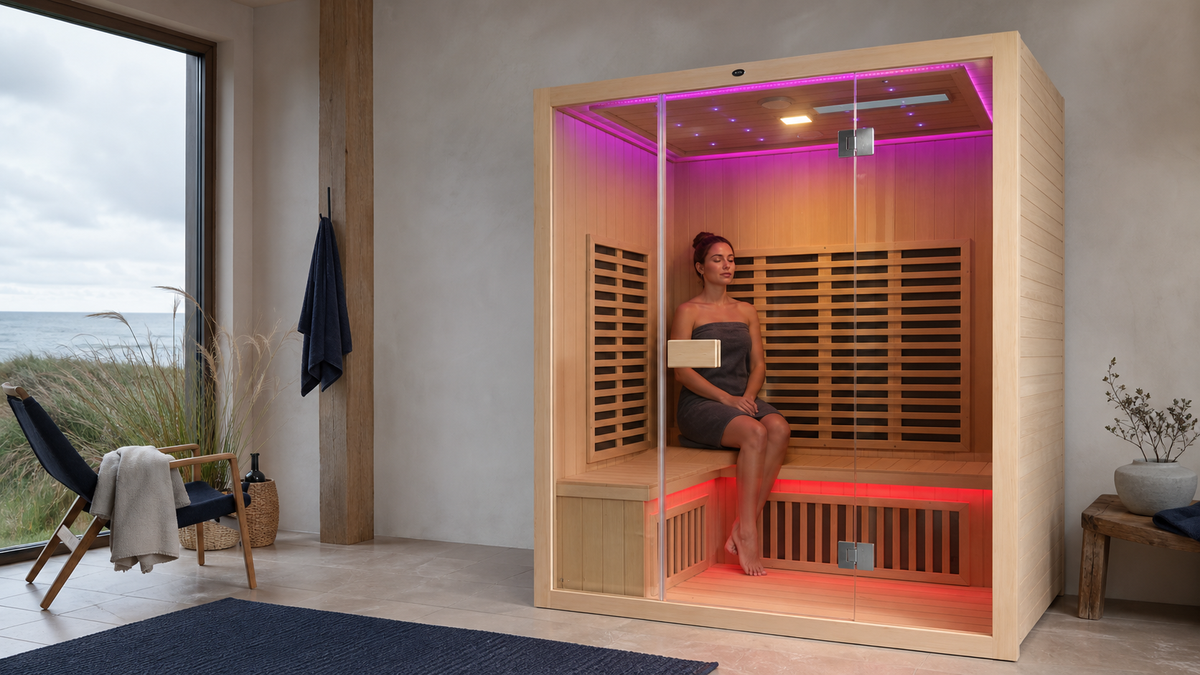
Quick answer: Infrared saunas use radiant heat to warm the body in a lower-temperature room than many traditional saunas. People commonly choose them for a calm, repeatable home ritual, gentle-feeling warmth and post-exercise comfort. Research into sauna bathing is promising, but evidence varies by sauna type and outcome, so the strongest case is a well-designed routine you enjoy and can use consistently—not miracle claims.
If your evenings end with a tense body and a mind that refuses to switch off, a home infrared sauna can create a deliberate boundary between “on” and “off”. The appeal is simple: step inside, close the door and give yourself a quiet window with no screens, no commute and no waiting for a spa appointment.
What is an infrared sauna?
A traditional sauna heats the air and surrounding surfaces. An infrared sauna uses radiant panels to transfer heat more directly to the body, while the cabin itself usually operates at a lower air temperature. The experience still feels warm and encourages sweating, but many people find the gentler room temperature easier to settle into.
“Infrared” describes how heat is delivered; it does not guarantee a particular health result. Cabin size, heater placement, temperature range, ventilation, build quality and how you use the sauna all shape the experience.
Five reasons people build an infrared sauna routine
1. A calmer transition out of a busy day
Warmth, privacy and a fixed period away from notifications can support relaxation. That does not make a sauna a treatment for anxiety or insomnia, but it can become a useful cue that the working day is over.
2. Temporary comfort for tired muscles
Heat increases skin temperature and blood flow, and many users describe a looser, more comfortable feeling after training or long periods at a desk. Evidence reviews include studies reporting changes in pain and quality-of-life measures, although the research is mixed and often based on small groups.
3. A repeatable recovery habit at home
The most effective wellbeing habit is often the one that fits real life. A home cabin removes travel, booking and opening hours, making it easier to pair heat with an existing routine such as an evening stretch, a rest day or a quiet Sunday reset.
4. A lower-temperature heat experience
Infrared cabins generally use lower air temperatures than traditional Finnish-style saunas. That can suit people who enjoy deep warmth but dislike the intense hot-air sensation of a high-temperature sauna.
5. Time that feels deliberately yours
The emotional benefit is not complicated: a closed door, a warm bench and a defined pause. Used consistently, the ritual can help turn recovery from something you postpone into part of how you live.
What does the research actually say?
A systematic review of regular dry-sauna studies found potentially beneficial effects across several health measures, but also highlighted substantial differences in study design, sauna type, session length and participant groups. Importantly, evidence from traditional Finnish sauna studies should not automatically be presented as proof for every infrared cabin.
It is also worth challenging two popular claims. Sweating is primarily how the body regulates temperature; it should not be marketed as a substitute for the liver and kidneys or as a guaranteed “detox”. A temporary change on the scales after sweating mainly reflects fluid loss, not lasting fat loss.
For an evidence overview, see the peer-reviewed systematic review of regular dry sauna bathing.
How to start an infrared sauna routine
- Read the cabin manual first. Follow its temperature, timer, clearance and electrical guidance.
- Begin conservatively. Choose a shorter, lower-temperature session and increase gradually only if you feel comfortable.
- Hydrate normally. Arrive well hydrated and replace fluids afterwards. Avoid alcohol before or during a session.
- Keep the ritual simple. Sit comfortably, breathe normally and leave immediately if you feel dizzy, faint, nauseous or unwell.
- Let the routine earn its place. Track how you feel later that evening and the next morning instead of chasing the hottest or longest session.
Choosing a home infrared sauna in the UK
Start with your space and household rather than a list of headline features. Measure the installation area, doorway route and ceiling height. Decide whether you need a one-person retreat or room to share. Confirm the electrical requirements with the product documentation and a qualified electrician where necessary.
Then compare the details that affect everyday use:
- internal bench space and stated occupancy;
- heater coverage and control placement;
- ventilation and required clearances;
- indoor or outdoor suitability stated by the manufacturer;
- assembly, delivery access and after-sales support;
- warranty terms and availability of replacement parts.
Explore the Still & Surge infrared sauna collection to compare different cabin sizes and formats.
Who should take extra care?
Heat exposure is not suitable for everyone. Speak with a healthcare professional before sauna use if you are pregnant, have a cardiovascular condition, take medication that affects blood pressure or temperature regulation, have recently been unwell, or are unsure whether heat exposure is appropriate for you. Children should only use sauna facilities under appropriate medical and adult guidance.
The bottom line
The most convincing benefit of a home infrared sauna is not a dramatic promise. It is the ability to create a reliable pocket of warmth, stillness and recovery in the middle of ordinary life. Choose a cabin that fits your home, begin gently and judge the routine by how consistently it helps you slow down and return restored.


Leave a comment
This site is protected by hCaptcha and the hCaptcha Privacy Policy and Terms of Service apply.