
Quick answer: Cold-water immersion may reduce perceived muscle soreness after hard exercise, and emerging research is exploring time-dependent effects on stress and wellbeing. It also creates a powerful feeling of alertness. But colder is not automatically better, evidence for many broad health claims remains limited, and cold water can place sudden strain on breathing and the cardiovascular system.
An ice bath asks for your full attention. The moment you enter, tomorrow’s to-do list disappears and the only task is to stay calm, breathe and listen to your body. That immediate shift is why many people use a cold plunge as a morning reset or a clear end point after training.
What are the most credible ice bath benefits?
Reduced post-exercise soreness
This is where the evidence is most useful. Systematic reviews in physically active adults suggest cold-water immersion can improve perceived recovery and reduce delayed-onset muscle soreness after strenuous exercise. That does not mean every session improves strength or performance, and the ideal temperature and duration are not settled.
A strong feeling of alertness
Cold water triggers an immediate physiological response: breathing rate, heart rate and blood pressure can rise. Subjectively, that can feel intensely wakeful. It is also the reason entry must be controlled rather than treated as a test of toughness.
A ritual for composure
Learning to slow your breathing and remain composed during a brief, controlled exposure can make the practice feel mentally clarifying. A 2025 systematic review found some time-dependent changes in stress and quality-of-life outcomes, but did not find consistent immediate benefits for mood or immune function. The honest conclusion is promising, not proven.
A repeatable home recovery cue
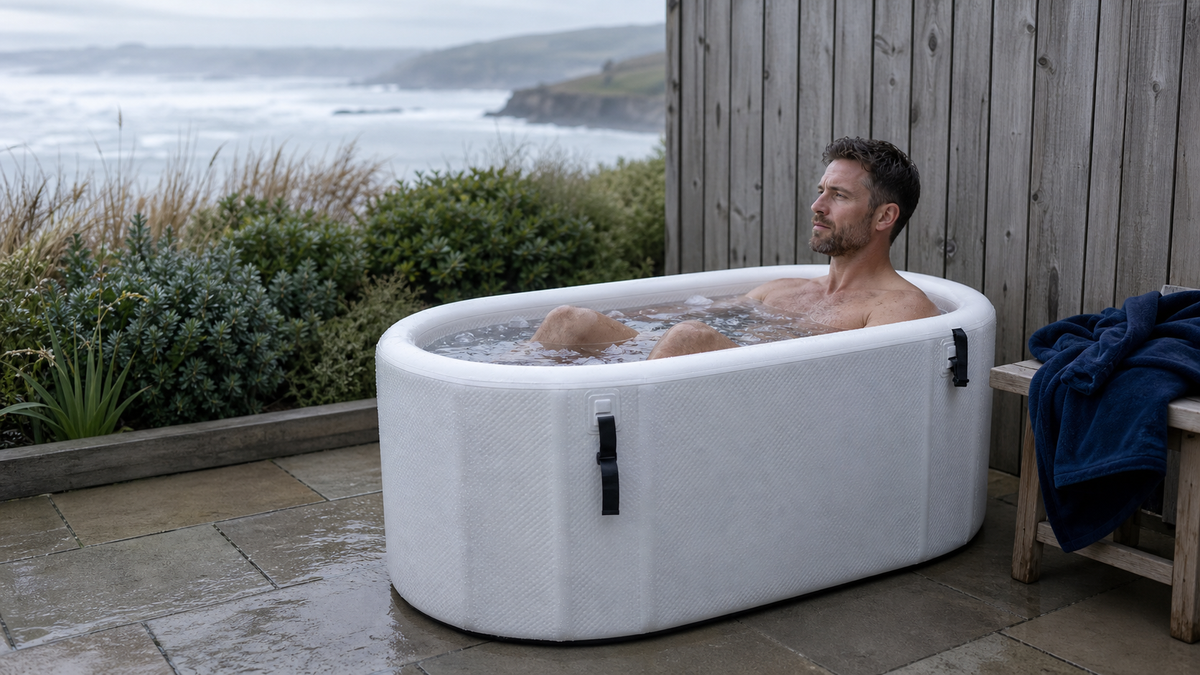
A home ice bath can make the routine practical: measure the water, enter, recover, rinse and return to your day. Consistency matters more than copying an extreme protocol from social media.
A sensible beginner ice bath routine
- Check whether cold exposure is appropriate for you. If you have a heart or circulatory condition, uncontrolled blood pressure, reduced sensation, a history of fainting, are pregnant, take relevant medication or have any concern, speak to a healthcare professional first.
- Prepare before you enter. Put a towel, dry layers and non-slip footwear within reach. Use a stable bath on a level surface and keep your exit route clear.
- Measure the water. The RNLI defines water at 15°C and below as cold. A beginner does not need to chase near-freezing temperatures; start at the milder end and keep exposure brief.
- Enter slowly and stay upright. Do not jump in. Keep your head and face out of the water, especially while you learn how your breathing responds.
- Breathe normally. Focus on a calm, controlled exhale. Do not combine immersion with breath holds or hyperventilation.
- Leave while you are still in control. Exit immediately if you feel chest pain, dizziness, numbness, confusion, panic or unusual discomfort.
- Warm gradually. Dry off, add layers and allow your body to rewarm naturally. Avoid using alcohol as a warming strategy.
There is no universal perfect time or temperature. Your safe starting point depends on your health, experience, environment and the product instructions. Brief, controlled and repeatable beats extreme.
When should you use an ice bath?
Many people place cold immersion after a demanding endurance session, a competition or a high-volume training day when reducing perceived soreness matters. Others prefer it in the morning because the cold creates a clean break between sleep and the day ahead.
If your priority is long-term strength or muscle gain, avoid assuming that immediate cold exposure after every resistance session is automatically helpful. Recovery strategies should support your training plan, not replace sleep, nutrition, progressive programming and rest.
What an ice bath cannot promise
An ice bath is not a treatment for depression, chronic inflammation or disease. Evidence does not support presenting it as a guaranteed immune boost, fat-loss shortcut or cure-all. The more useful promise is smaller and more believable: a controlled cold practice may help some people feel alert and may reduce soreness after hard exercise.
For the research, read the systematic review of cold-water immersion after strenuous exercise and the systematic review of health and wellbeing outcomes. For UK cold-water safety, see the RNLI guidance on cold water shock.
Choosing an ice bath for home
Choose around the way you will actually use it. A portable bath suits flexible spaces and occasional sessions. A longer inflatable bath gives more room to sit lengthways. A rigid or timber-finished plunge can become a permanent part of a garden recovery area. If you want a controlled temperature without continually buying ice, compare compatible chillers, hose connections, filtration and the manufacturer’s operating requirements.
Browse Still & Surge ice baths and cold-plunge equipment, then use a thermometer and timer to make every session measurable.
The bottom line
Cold immersion should leave you feeling awake and composed, not defeated. Start milder than your ego suggests, keep the session controlled and build only when the routine feels predictable. The goal is not to endure the cold. It is to return to your day clearer than you entered.


Leave a comment
This site is protected by hCaptcha and the hCaptcha Privacy Policy and Terms of Service apply.